
Vision Changes After 50
Protecting Your Eyes and Seeing Clearly
Updated: September 2026
Written by: Golden Living Today Editorial Team
Sources reviewed: September 2026
As we get older, changes in our vision are common. You may find yourself holding a menu farther away, needing brighter light to read, or having more difficulty seeing clearly at night.
🩺 Medical Disclaimer: The information provided by Golden Living Today is for educational purposes only and is not intended to replace professional medical advice, diagnosis, or treatment. Always consult your physician or another qualified healthcare provider regarding any medical condition or before making changes to your healthcare, medications, or treatment plan.
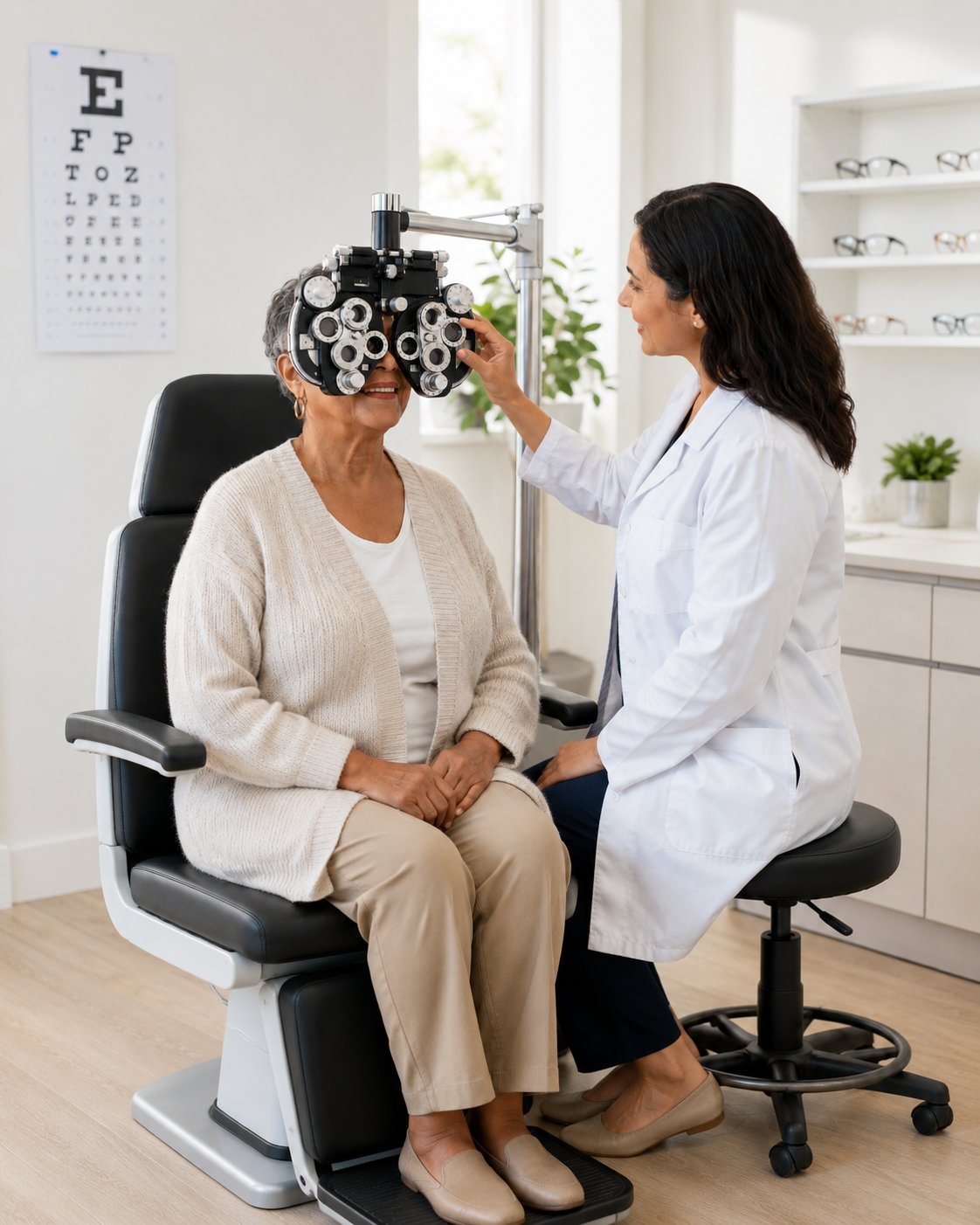
Some vision changes are a normal part of aging, but vision loss itself should not simply be considered a normal part of getting older. Other changes can be signs of eye conditions that need medical attention. Regular eye exams and healthy habits can help protect your eyesight and identify some problems before they cause noticeable symptoms.
In This Article…
• Common Vision Changes After 50
• Eye Conditions That Become More Common With Age
• Why Regular Eye Exams Matter
• Everyday Ways to Protect Your Eyes
• Making Your Home Safer for Changing Vision

Understanding what to expect — and knowing when to seek help — can make it easier to care for your eyes and stay independent as you age.

Common Vision Changes After 50
One of the most common age-related changes is presbyopia, which makes it harder to focus on objects up close. It usually becomes noticeable after about age 45 and may lead to using reading glasses, contact lenses, or a different eyeglass prescription.
You may also notice:
• Needing more light for reading or close-up tasks
• Difficulty adjusting between bright and dark areas
• Increased sensitivity to glare
• Colors appearing somewhat less vivid
• More difficulty seeing clearly at night
Although some changes are expected with age, significant or sudden changes in vision should never simply be dismissed as “getting older.”
Eye Conditions That Become More Common With Age
Several eye conditions become more common as we age.
Cataracts
A cataract occurs when the normally clear lens of the eye becomes cloudy. This can cause blurry or hazy vision, faded colors, glare, and difficulty seeing at night.
Glaucoma
Glaucoma damages the optic nerve and can gradually lead to vision loss. Some forms of glaucoma have few or no noticeable symptoms in their early stages, which is one reason regular eye examinations are so important.
Age-Related Macular Degeneration
Age-related macular degeneration, or AMD, affects the part of the retina responsible for sharp central vision. It can make activities such as reading, driving, and recognizing faces more difficult.
Diabetic Retinopathy
People with diabetes are at risk for diabetic retinopathy, which can damage blood vessels in the retina. Managing diabetes and having regular eye examinations can help detect problems before significant vision loss occurs.
These are among the major causes of vision loss in older adults, and some eye diseases may develop without obvious symptoms at first.
Dry Eye
Dry eye occurs when your eyes do not make enough tears or when the tears do not work properly. Symptoms may include dryness, burning, a scratchy feeling, redness, sensitivity to light, or blurry vision. Dry eye becomes more common after age 50 and can often be managed with appropriate treatment and lifestyle changes.
Why Regular Eye Exams Matter
You can have an eye condition and still feel that your vision is fine.
A comprehensive dilated eye exam allows an eye care professional to examine structures inside the eyes and look for signs of disease that may not yet be causing noticeable symptoms. Conditions such as glaucoma, diabetic eye disease, and age-related macular degeneration can sometimes be detected before a person realizes there is a problem.
The CDC recommends a comprehensive dilated eye exam every one to two years for adults over age 60. People with diabetes, high blood pressure, a family history of glaucoma, or other risk factors may need eye exams more often. Your eye care professional can recommend an exam schedule based on your age, overall health, family history, and individual risk factors.
Everyday Ways to Protect Your Eyes
Small habits can make a difference in protecting your vision.
Consider these simple steps:
• Keep up with regular comprehensive eye examinations.
• Wear sunglasses that block 99% to 100% of both UVA and UVB radiation.
• Wear protective eyewear when doing yard work, home repairs, or activities that could injure your eyes.
• Avoid smoking.
• Eat a balanced diet that includes leafy green vegetables and other nutritious foods.
• Stay physically active and maintain a healthy weight.
• Manage health conditions such as diabetes and high blood pressure.
• Know your family’s history of eye disease.
• Keep your eyeglass or contact-lens prescription current and use corrective lenses as recommended.
These habits support both eye health and overall health as you age.
Helpful Eye Protection Options
UV-protective sunglasses can help protect your eyes from ultraviolet radiation when you are outdoors. Look for sunglasses labeled as blocking 99% to 100% of both UVA and UVB radiation.
Example option: Tifosi Swank Lifestyle Sunglasses (paid link)
Protective safety glasses can help reduce the risk of eye injuries during yard work, home repairs, and other activities where dust, debris, or small particles may enter the eyes.
Example option: NoCry Adjustable Anti-Fog Clear Safety Glasses (paid link)
🔗 Affiliate Disclosure: As an Amazon Associate I earn from qualifying purchases.
Making Your Home Safer for Changing Vision
Good vision also plays an important role in preventing falls.
Make sure hallways, stairways, bathrooms, and entrances are well lit. Reduce clutter, remove tripping hazards, and consider adding night-lights or motion-sensor lights in darker areas of the home.
Keeping your eyeglass prescription current is important, too. Difficulty seeing changes in floor levels, stairs, or objects in your path can increase the chance of a fall.
When to Seek Medical Attention
Do not wait for your next routine eye appointment if you develop new or noticeably worsening vision problems, persistent eye pain, double vision, flashes of light, or a sudden increase in floaters. Contact an eye care professional promptly for guidance.
Some vision changes require immediate medical attention.
Sudden partial or complete loss of vision in one or both eyes is a medical emergency. Seek emergency medical care immediately, even if the vision loss is painless or seems temporary.
A sudden increase in floaters, flashes of light, or a dark shadow or “curtain” across part of your vision can be signs of retinal detachment. Retinal detachment is a medical emergency because prompt treatment may help prevent permanent vision loss.
Intense eye pain accompanied by a red eye, blurry vision, or nausea can be symptoms of acute angle-closure glaucoma and also requires immediate evaluation.
Do not assume a sudden vision change will go away on its own. When vision changes suddenly, seek medical attention promptly.

🌿 Golden Moment
Your eyesight helps you experience so many of life’s little moments — a loved one’s smile, a beautiful sunset, the pages of a favorite book. Taking care of your eyes today is one more way to protect the independence and experiences you treasure tomorrow.
Related Articles
Continue learning with these related articles:
• Hearing Loss After 50: Protecting Your Hearing and Staying Connected
Learn how to recognize hearing changes, protect your hearing, and explore options that can help you stay connected.
• How to Prevent Falls and Stay Safe at Home
Learn practical ways to reduce fall risks, stay active, and create a safer home environment.
• Nutrition for Healthy Aging: Eating Well After 50
Explore practical ways to support your health with balanced nutrition, hydration, and nutrient-rich foods.
📚 Sources & Further Reading
• National Eye Institute (NIH) — Taking Care of Your Vision After 50
• National Eye Institute — Presbyopia
• National Eye Institute — Cataracts
• National Eye Institute — Glaucoma
• National Eye Institute — Age-Related Macular Degeneration (AMD)
• National Eye Institute — Diabetic Retinopathy
• National Eye Institute — Dry Eye
• National Eye Institute — Retinal Detachment